

How Well Do Leaders Listen? Not Very — Research Study
How well do managers listen? How effective are they at gaining commitment—as opposed to compliance? To what extent do they involve the other person in discussion—versus telling them what to do? It’s been said that there are two kinds of leaders: leaders who listen and leaders who don’t listen. We wanted to find out what percentage are in each camp and what behaviors are most prominent.
We decided to look at interpersonal skills across a broad group of leaders to see what sort of conclusions could be drawn. The results, as you will see, surprised us.
Leaders Who Don’t Listen
Overall, managers did a good job guiding the conversation, keeping things on track, and seeing the meeting through to formulating an action plan. That, we expected. However, the managers as a group did not listen well. They did little probing. They didn’t use the other person’s ideas in arriving at a solution. Instead, they tended to push their own views. They did not engender commitment but, rather, settled for compliance. The extent to which these practices were present is what surprised us. Three out of four managers fell into the leaders who don’t listen group.
Why is this important? These behaviors impair decision-making and execution—two crucial leadership functions. Decisions are not as good as they could be because the manager is not tapping into the other person’s ideas, only their own. How effectively will your people execute when they are coerced into doing something and are not truly committed?
Below, we’ll briefly explain our methodology, then look more closely at the findings. And finally, we’ll provide some thoughts on how to address these issues.
The Methodology
Eighty-four executives representing many fields, including financial, automotive, utility, insurance, retail, manufacturing, and healthcare, participated in this four-year study. Several were from Fortune 500 companies. The managers were all talented and considered successful at their jobs.
Managers generally do fine when discussing good news or lower-stakes topics. The interpersonal issues rear their heads during more critical conversations and conversations where there is a difference of views. We wanted to see how managers handled challenging conversations where the stakes were high.
A Tough Conversation with a Direct Report
We decided to have managers role play conducting a challenging discussion with their direct report. Experienced instructional consultants from our staff played the role of direct report. We allotted 20 minutes for the interaction and recorded it. Trained observers uniformly scored the recording afterward.
In the role-play, the manager had to inform a highly-skilled direct report that he was being passed over for a badly wanted promotion. The leader had to communicate that, although the person was qualified for the promotion, he did not qualify because of his poor people skills. The leader was also asked to maintain the employee’s interest in continuing their work at the company. The employee still had a future there.
What Were We Looking For?
In general, we looked at several things:
- Can the manager maintain control of the conversation and see it through to a successful conclusion?
- Does the manager involve the participant in a give-and-take conversation? Is it a dialogue or a monologue?
- Does the leader engender commitment to the next steps? Or does he settle for compliance or, worst case, coercion?
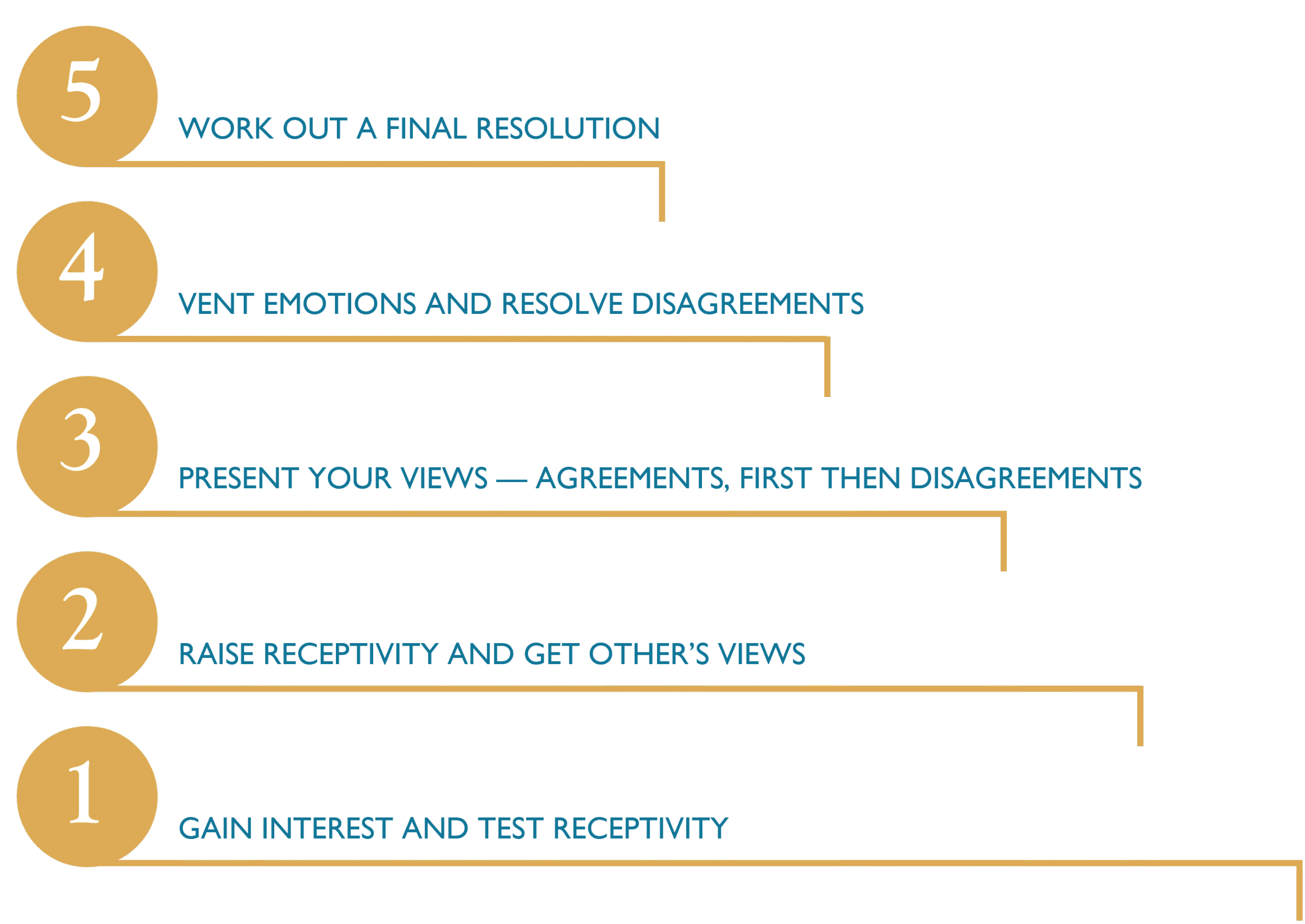
These principles underpin what we call the Five-Step Format—a tool for having optimally successful conversations. We teach this in our Leadership Through People Skills book and give participants a chance to practice these skills and get feedback in our leadership workshops.
The Five-Step Format
Our Findings
Exerting Control
The executives were skilled at taking and maintaining control of the meeting. For instance:
89% of the managers stated the purpose of the meeting.
69% of managers kept the meeting on track.
87% communicated their rationale for the action plan.
The managers did a good job of taking and maintaining control of the meeting and seeing it through to the end, where they established next steps. Clearly, the managers were not sitting on their hands passively. They were active in the discussion, highly task-oriented, and made things happen.
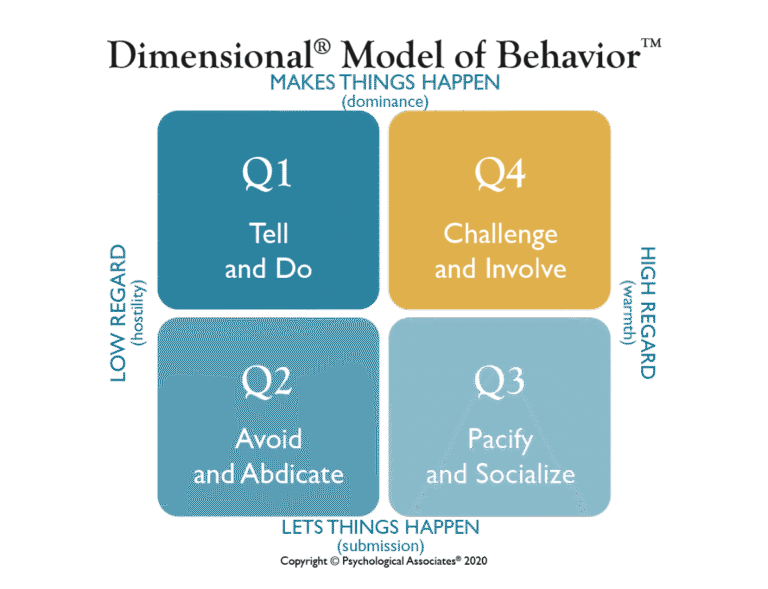
In our Q4 Model of Behavior, these leaders made things happen. They fell above the “task continuum” and exhibited an action orientation. This is a positive attribute for managerial behavior.
Not Caring About Others Feelings
Despite demonstrating great skill when it came to controlling the meeting, managers did not show regard for the other person’s feelings.
Checking Interest to Proceed
After stating the purpose of the meeting, only 12% of managers checked for the other person’s readiness to proceed. The manager was plowing right through the conversation without regard for whether the other person was on board or not. This is a dangerous behavior for several reasons.
For one, it conveys a lack of regard for the person, which can be demotivating. Beyond that, just because you are ready to meet doesn’t mean the other person is. If they’re not prepared to proceed, you are both wasting your time. Your words are going to go in one ear and right out the other. Are you really going to get this person’s best thinking if they’re not receptive to having the meeting in the first place?
Gauging the other person’s receptivity to proceed is a crucial step, especially when you are delivering bad news, and the person is likely to be unreceptive.
After stating the purpose of the meeting, only 12% of managers checked for the other person’s readiness to proceed.
Not Acknowledging the Other Person’s Emotions
After informing the person that they did not get the promotion, most managers did not involve the direct reports in dialogue. They didn’t acknowledge the other person’s distress over learning the bad news or collaborate on a course of action for the direct reports to improve their future performance.
Specifically, less than 25 percent of the participants acknowledged the other person’s feelings. And only 1 out of 5 managers allowed time for direct reports to vent their emotions.
If you are going to deliver bad news, the recipient will likely have some strong emotions. These need to be vented to have a productive conversation.
Why do leaders perform so poorly in this area? One reason is that managers are uncomfortable dealing with feelings, especially in a business setting. They don’t know how to appropriately acknowledge and vent another’s emotions. After all, they are not trained counselors.
Another is that managers routinely place a high value on keeping a tight lid on encounters that may go in unpredictable directions. In order to arrive at a predictable outcome envisioned by the executives, they were willing to sacrifice open communication and collaboration—both ways to engage employees.
Had the managers spent a few moments acknowledging the anger and disappointment of the direct reports in not getting the promotion, they could have helped the direct reports vent emotions that were likely interfering with participating in a meaningful discussion.
The little questioning that managers employed served to control the meeting rather than solicit input.
Ineffective Listening
Managers did not solicit the other person’s views. According to our findings:
Only 24% of managers solicited the direct report’s ideas.
Just 22% of managers got the direct reports’ views before presenting their own.
A mere 28% of managers asked questions to understand the direct report’s views.
The managers did not seem interested in the direct report’s views. What was conveyed was, “I have all the requisite information. I don’t need your input, so I’ll talk, and you listen.”
This “leaders who don’t listen” theme was further apparent in the number of questions the managers asked. In the 20 minute meeting, 80% of the managers asked five questions or less. That included “Hi, how are you doing?” at the outset (if they even asked that!) A staggering 7% of the managers asked no questions at all.
When the managers did probe, only 30% of their questions were open-ended. For instance, “What is your view of your qualifications for getting the promotion?” or “What do you think you might do so that you’ll be chosen the next time a position is available?” The little questioning that managers employed served to control the meeting rather than solicit input.
Compliance vs. Commitment
Managers engendered compliance, not commitment. Hence, their execution was not as strong as it could have been.
As we know, the more involved someone is in a problem-solving discussion, the more committed they will be to the solution.
Unfortunately, less than 1 of out 3 managers developed any give-and-take in the form of a discussion.
Perhaps even more concerning for successful execution, 5 out of 6 leaders did not ask for the direct report’s input in developing an action plan regarding the direct report’s future.
How likely is it that a skilled and strong-minded employee would buy into a ready-made plan handed to them with little or no input or collaboration in today’s business world? Such a reaction is about as probable as someone enthusiastically being served a subpoena.
Self-Awareness of Interpersonal Skills:
What was particularly striking was that many expressed the view that they had performed well in a debriefing session. A frequent comment was, “I felt I got the job done.” They thought so because they controlled the meeting and sent the direct report back to their job with a plan.
In some ways, this was the most alarming finding of all. They informed the person they didn’t get the promotion, didn’t acknowledge their feelings, didn’t ask for their input in the discussion, and then told them what their action plan would be. And they thought that they handled this discussion well?
Based on our experience with countless 360-degree surveys, we know that leaders often have inaccurate perceptions of how they come across in certain areas. But it is disconcerting for these managers to think that they performed well when they were so uncollaborative and focused only on their own ideas.
What emerged was a pattern of controlling, but not engaging, behavior.
Statistical Summary
| BEHAVIOR | Yes (%) | No (%) |
|---|---|---|
| INITIATES: | ||
| Stated purpose of meeting | 89% | 11% |
| Kept meeting on track | 69% | 31% |
| Stated benefit of making a commitment | 74% | 26% |
| Communicated their rationale for action plan | 87% | 13% |
| ACKNOLWLEDGES FEELINGS: | ||
| Checked for readiness to proceed | 12% | 88% |
| Acknowledged direct report’s feelings | 23% | 77% |
| Allowed time for direct report to vent emotions | 20% | 80% |
| SOLICITS INPUT: | ||
| Got details before presenting own views | 22% | 78% |
| Solicited direct report’s ideas | 24% | 76% |
| Questioned to understand direct report | 28% | 72% |
| Checked for understanding of differences in views | 16% | 84% |
| Developed constructive give-and-take | 31% | 69% |
| ACTION PLANNING: | ||
| Asked for direct report’s input first in formulating an action plan | 17% | 83% |
Controlling Leadership
In conclusion, the 84 managers across a broad cross-section of industries and companies got a difficult task done. And they did it in a command-and-control fashion.
They did not solicit the other person’s ideas regarding the issue. They ignored the other person’s feelings in this challenging discussion. And they told the other person what their next steps were going to be, again, without their involvement.
Ironically, in telling a direct report that they were deficient in people skills, the executives were not applying people skills themselves.
This is not an indictment of these decision-makers’ abilities. They are likely judged as successful in their corporate cultures for exhibiting a take-charge attitude or having excellent financial or technical acumen. However, we would argue that the decisions reached were not as good as they might have been, with only one person’s views considered rather than two. Additionally, the execution will not be as strong as it might have been either, as the other person was not involved in crafting the solution.
The take-charge, low regard behavior that the managers exhibited may get results in the short run. But over time, people get tired of their ideas not meaning anything. Turnover tends to be higher with Q1 (tell & do) managers, meaning that their talent goes out the door, and they have to start all over hiring new people, training them, and then seeing how long they will stay before they have to start looking again.
As communications author, Andy Stanley warns, “Leaders who do not listen will eventually be surrounded by people who have nothing to say.”
How to Improve Listening Skills
Fortunately, leaders can learn—and bring back to their job—skills that make them more empathetic, better collaborators, and improved listeners.
Remember that active listening is what makes or breaks a conversation, so it’s important you give this soft skill its due attention.
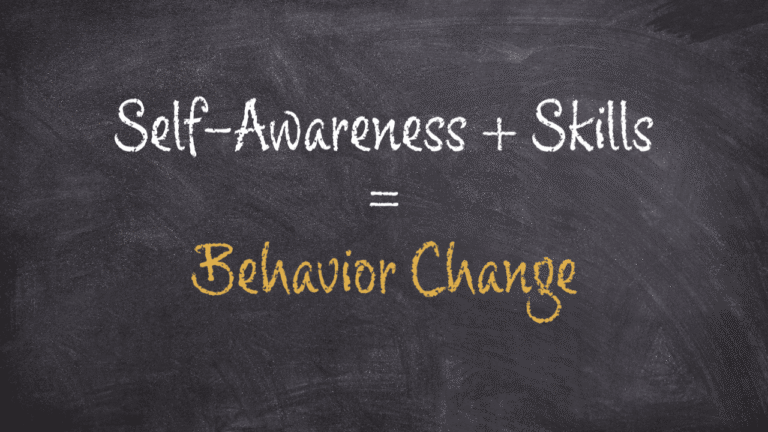
It isn’t necessary to delve into employees’ psyches or to try to change their personalities. Productive behavior can be learned. As we say, self-awareness + skills = more productive behavior.
Listening Workshops
This is the premise of our Q4 Leadership seminars, offered to executives to provide them with tools for improving their communication and influencing capabilities. We have conducted appraisals of the seminar participants’ performance. After six hours of the three-day seminar, participants participate in a role-play practice similar to the one described. Other seminar members are coached to play the part of the direct report.
After only a few hours of exposure to some simple techniques for better communication, the seminar participants are able to modify their behavior dramatically compared to the executives in our study. While the executives averaged eight probes in their role plays, the seminar participants averaged almost 22 in their practices. Although only a quarter of the executives questioned the direct reports to obtain the other’s ideas in the meeting, all of the seminar participants asked questions to get the other person’s ideas.
For more information, visit our Leadership Development page for virtual and in-person solutions.
Listening Workshops
This is the premise of our Q4 Leadership seminars, offered to executives to provide them with tools for improving their communication and influencing capabilities. We have conducted appraisals of the seminar participants’ performance. After six hours of the three-day seminar, participants participate in a role-play practice similar to the one described. Other seminar members are coached to play the part of the direct report.
After only a few hours of exposure to some simple techniques for better communication, the seminar participants are able to modify their behavior dramatically compared to the executives in our study. While the executives averaged eight probes in their role plays, the seminar participants averaged almost 22 in their practices. Although only a quarter of the executives questioned the direct reports to obtain the other’s ideas in the meeting, all of the seminar participants asked questions to get the other person’s ideas.
For more information, visit our Leadership Development page for virtual and in-person solutions.